One Hero Piece, Three Holiday Outfits: The Cost-Per-Wear Case for Editing Up
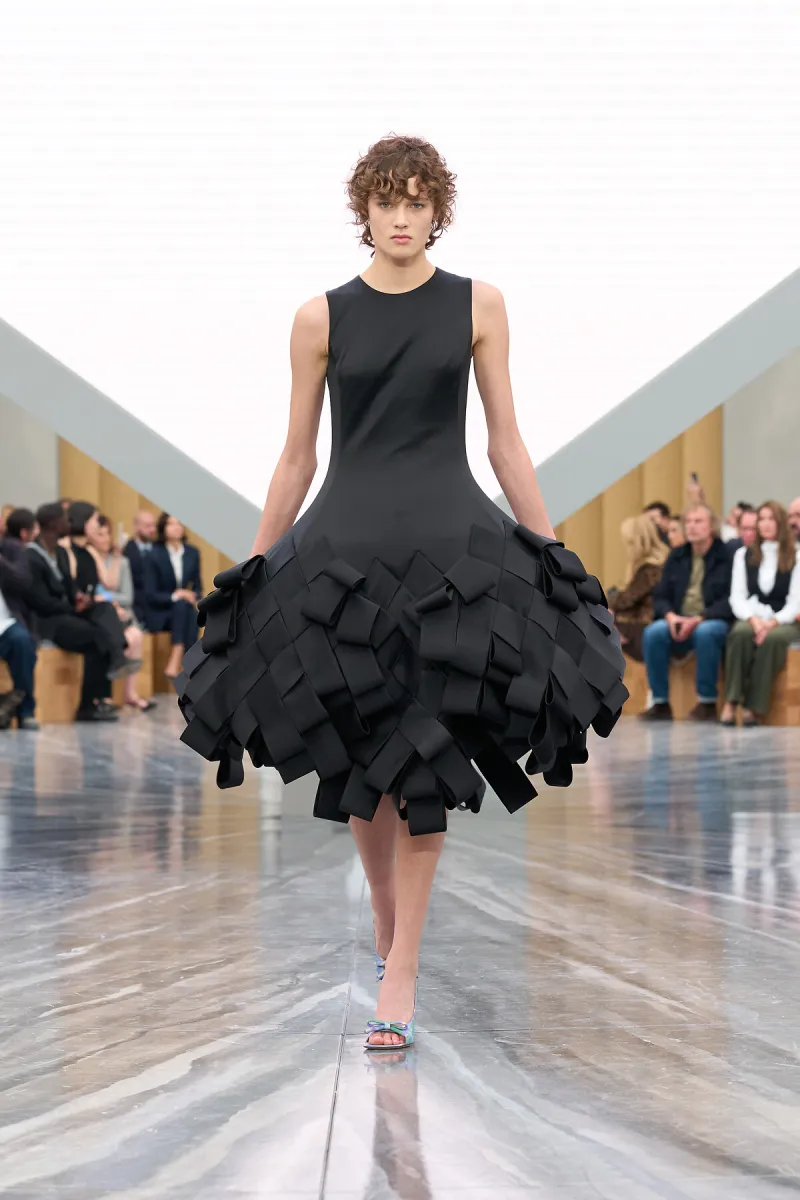
Photo: fashion editorial woman styling velvet blazer metallic skirt sculptural bag holiday outfits, via diorama.dam-broadcast.com
Holiday shopping has a math problem. We buy for the event in front of us, not the month ahead. One office party, one family dinner, one New Year's Eve, and suddenly there are three new outfits hanging in the closet, each with a cost per wear that makes no sense after January 1. The curated closet takes a different route: buy one hero piece, then make it work three ways.
This is not a lecture about minimalism. It is an argument about impact. A single strong piece, repeated with different basics, looks more considered than three forgettable outfits. It also gives you a clear shopping filter. If a piece cannot pull off at least three holiday events, it is probably a costume, not a wardrobe addition.
The rule, briefly
A hero piece is the thing people notice first: a texture, a color, a shape, a shine. The rest of the outfit stays quiet. That means the hero has to fit your existing shoes, your existing outerwear, and your actual life. Before buying, ask three questions. Can I wear it to at least three different venues? Can I wear it after December 31? And does it work with the shoes I already own? If the answer is no to any of those, put it back.
Archetype 1: The velvet blazer
A velvet blazer is the easiest hero piece to justify because it behaves like a jacket. It has structure, it handles cold rooms, and it can be dressed up or down. Look for a single-breasted cut in black, deep green, or burgundy. Avoid anything with a shawl collar and too much sheen unless you are aiming for a specific costume.
Outfit one: office party. Black trousers, a plain white or gray tee, metallic flats, and the blazer. The tee keeps it from looking like you are interviewing for a board seat. Outfit two: family dinner. A slip skirt, a fine-knit turtleneck, knee boots, and the blazer. Outfit three: New Year's Eve. Dark straight-leg jeans, a camisole, heeled boots you already own, and the blazer. Same jacket, three different moods.
The math: A $120 blazer worn to three holiday events plus two January dinners is five wears, or $24 per wear. If you wear it once a week through February, it drops to $15. Compare that to a $70 novelty top worn once. The blazer wins.
Archetype 2: The metallic skirt
A metallic skirt sounds louder than it is. Choose a midi length, a bias cut, and a muted finish like brushed silver, bronze, or gunmetal. Avoid anything that looks like wrapping paper. The goal is a piece that catches light without announcing itself from across the room.
Outfit one: office party. A chunky cream knit, sheer black tights, and metallic flats. The knit makes the skirt read daytime-adjacent. Outfit two: family dinner. A black cashmere or cotton crewneck, knee-high boots, and a simple gold chain. Outfit three: New Year's Eve. A black tank, the velvet blazer from above, and a heel. If you already own the blazer, you have just doubled the hero piece without buying another one.
The math: An $80 skirt worn to four events is $20 per wear. Add a January birthday dinner and it is $16. The catch is that metallic skirts show wrinkles and cheap lining. Check the seams and the fabric weight before you commit.
Archetype 3: The sculptural bag
The quietest hero piece on the list, and often the smartest. A sculptural bag in a neutral metallic, cream, or black adds shape to a simple outfit without requiring a new dress. Look for a rounded handle, an asymmetrical flap, or a soft pouch shape. It should fit your phone and a card case, but not your entire commute.
Outfit one: office party. All black, with the bag as the only shine. Outfit two: family dinner. Straight-leg jeans, a blazer, and the bag. Outfit three: New Year's Eve. A slip dress and the bag, with pearl earrings if you want one more layer. The bag works because it does not compete.
The math: A $90 bag worn twelve times between December and February is $7.50 per wear. That is the lowest math on this list, which is why a bag is often the best holiday purchase. It does not care about your size, your weight, or whether you ate too much at dinner.
The math that keeps you honest
Use a simple formula: price divided by realistic wears. Not fantasy wears. Realistic. If you are not sure, count the invitations on your calendar and add one. If the result is under $20 per wear before New Year's Day, it is probably a good buy. If it is over $40, you need a stronger reason than festive.
The comparison that matters is not the hero piece versus a cheaper version. It is the hero piece versus three separate outfits. Three $50 party looks cost $150 and deliver three wears. One $120 blazer and three outfits from your closet cost $120 and deliver at least five. The curated closet is not about spending less on every item. It is about spending well on the item that works hardest.
What to skip
Skip the matching holiday set unless you genuinely love both pieces separately. Skip shoes that only work with one dress. Skip anything that requires a special bra or a tailor you do not have time to visit. Skip embellished pieces that cannot be cleaned. And skip the idea that every event needs a new look. The most edited wardrobes are not the emptiest ones. They are the ones where every piece has a job.
One hero piece, three outfits, and a little arithmetic. That is the holiday rule worth keeping.