The Tailor's Short List: Eight Fixes Under $150 That Make Winter Clothes Look Custom
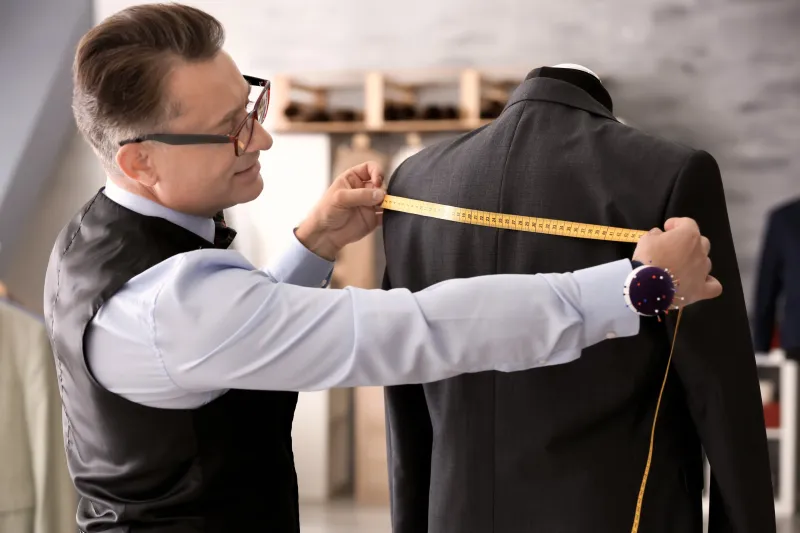
Photo: tailor pinning coat sleeve fitting atelier measuring tape, via www.mysuittailor.com
There is a specific look that separates clothes that photograph well from clothes that look expensive in person, and it is almost never the fabric. It is proportion: a sleeve that ends at the wrist bone, a coat that nips where your waist actually is, trousers that break in one clean line over a shoe. You can buy that look for the price of a decent dinner, and you do not need to lose a dress size or find a new brand to get it.
Below are eight alterations that reliably change how a garment reads, ranked roughly by payoff per dollar. US price ranges reflect what independent tailors and dry-cleaning alterations desks charge in major metros in 2026 — expect the low end in smaller cities and the high end in New York, Los Angeles, or Chicago. None of them individually runs past $150, and most land well under.
1. Hem the coat — $35 to $75
Outside of the sleeve, this is the highest-impact fix in a winter wardrobe. An overlong coat drags the whole silhouette down, makes legs look shorter, and reads as borrowed. A coat hemmed to just below the knee, or to mid-calf if you are taller, looks intentional.
What to ask: bring the boots or shoes you wear most and wear them to the fitting. Ask whether the hem can be done with a blind stitch that keeps the original finish, and confirm the tailor will press the hem flat afterward. Wool and wool-blend coatings handle this beautifully. Skip the alteration on bonded or glued hems — there is no seam allowance to work with.
2. Shorten the sleeves — $25 to $50
Sleeves that pool over the hands add bulk to everything above the waist. Quick test: put the coat on and let your arms hang. The cuff should hit roughly at the wrist bone, showing a half inch of sweater or shirt underneath if you layer that way.
What to ask: whether the coat has working buttonholes at the cuff. If it does, the tailor may need to move the buttons up, which adds $15 to $30. On knits, sleeve shortening is trickier because the ribbed cuff is the finish — ask if the cuff can be removed and reattached rather than cut off entirely.
3. Suppress the waist — $30 to $65
A dress, a blazer, or a heavy shirt that fits at the shoulders but hangs straight through the middle can be taken in at the side and back seams for a fraction of what a new version costs. This is the alteration that makes off-the-rack evening pieces look like they were made for the person wearing them.
What to ask: how much seam allowance is available. A garment that is already close-fitting can only lose about an inch; a boxy cut can lose two or three. Bring the undergarments you plan to wear and ask the tailor to pin it standing, then sit down in it before you agree to the work.
4. Taper the trousers — $30 to $55
Wide wool trousers are everywhere this season, and they look best when the leg line narrows slightly from the knee down. Tapering an existing pair costs far less than buying a new one and instantly cleans up the silhouette over a boot.
What to ask: for a taper that follows the outside seam and leaves the back seam alone. Bring the shoes. Ask whether the hem will need to be redone after the taper — often it does, and some tailors bundle the two for a flat rate if you ask upfront.
5. Swap the buttons — $10 to $40 total
This is the cheapest trick on the list and the one most people never try. Plastic buttons in a dull tone drag down an otherwise good coat, and swapping them takes fifteen minutes with a needle or five dollars at an alterations counter. Horn, corozo, or matte metal in a similar diameter changes the whole register of the garment.
What to ask: nothing, if you are doing it yourself. Bring one original button to a notion shop to match the diameter and shank depth, and check that the buttonhole width clears the new button. Toggle coats and double-breasted cuts need more buttons than you think — buy two extra.
6. Fix a party dress hem or strap — $30 to $70
Holiday dressing is where small alterations pay off fastest. A dress that hits awkwardly at the shin, or whose straps slip off the shoulder all night, looks discounted. Hemming to the right length, or taking a quarter inch out of the straps, does not.
What to ask: for a hem that keeps the original finish where possible. If the dress is lined, ask whether the lining will be shortened separately — it should be. For straps, ask for the adjustment to be done from the back so the front stays clean.
7. Add a hidden snap or hook — $10 to $25
Coats that gap open at the chest, wrap dresses that will not stay closed, a blazer that pulls at the button — a single hidden snap or hook-and-eye can solve all three for the price of lunch. It is invisible and reversible, which makes it a safe alteration on pieces you are unsure about.
What to ask: for the snap to be sewn onto a small reinforcement patch of interfacing so it does not pull through the fabric over time. On fine wools and silks, mention the fabric weight so the tailor picks an appropriately small closure.
8. Let down a hem or line a sleeve — $40 to $90
If you have a coat that is slightly too short or a jacket with scratchy wool against the arm, this is worth pricing out. Letting down works only when the original hem was turned up with allowance left intact — many mid-priced garments leave about an inch, some leave none. A sleeve lining is more reliable: any competent tailor can add one in a breathable cupro or polyester for a fraction of the garment's cost.
What to ask: for an honest assessment of how much fabric exists inside the hem before you commit. Ask to see it if you want proof.
What not to bother with
Shoulders. Restructuring a shoulder costs more than most coats and rarely looks right on a finished garment. Bonded or glued seams. Anything with a fused lining that has already started to bubble. And skip alterations on clothes you do not love — a $50 fix on a $40 sweater you resent is still a bad deal.
How to brief your tailor
Bring the shoes, the whole outfit, and a photo of how you want the piece to sit. Say the outcome, not the measurement: 'I want this to end just below the knee' is more useful than an inch count. Ask for the price before the work starts, ask when it will be ready, and if you have a holiday party on the calendar, build in two weeks — December is the busiest month an alterations shop has.